Does the missed opportunity finder contact clients automatically?
No. The strongest first version recommends actions for a person to review. It can draft a note, task, alert or email, but the salesperson or founder approves what happens next.
Missed Opportunity Finder
A missed opportunity finder reviews call transcripts against your CRM, services and sales process, then flags the next actions worth a human review.
Input
Calls + CRM
Output
Opportunity flags
Control
Human approval
The workflow
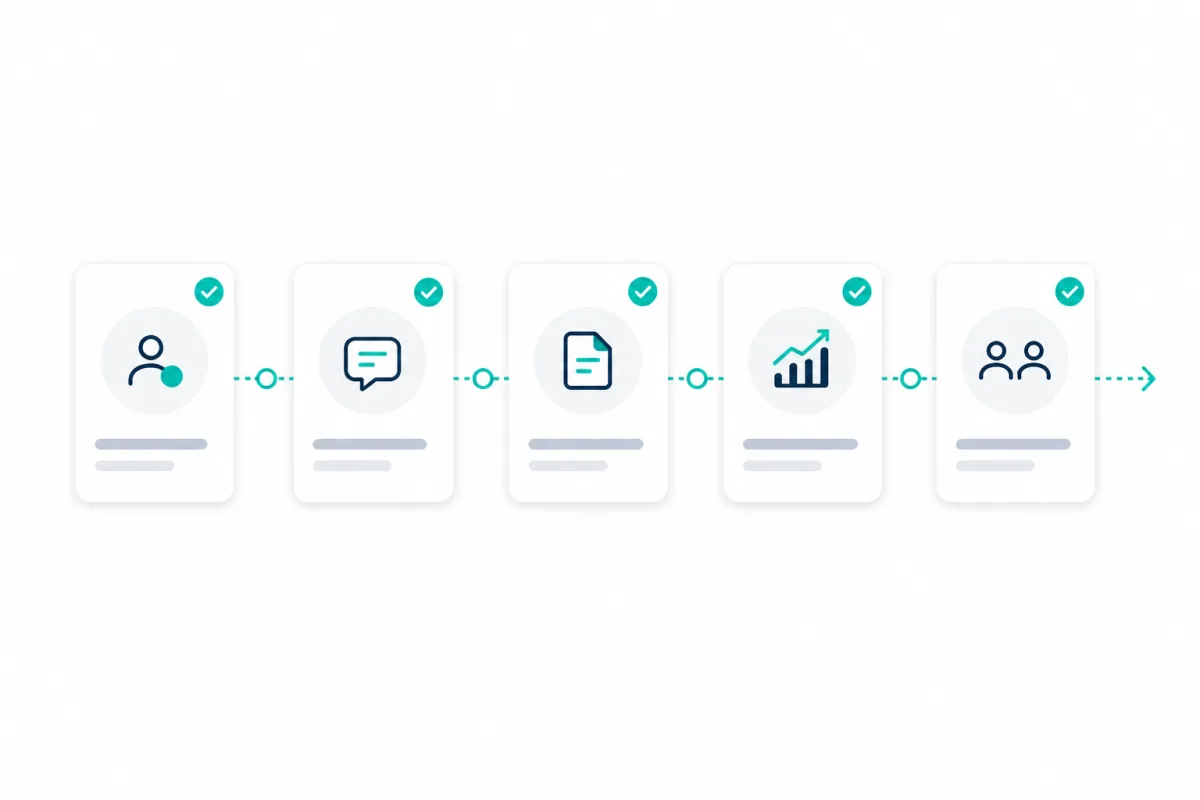
The workflow gathers context, checks the call against your opportunity rules and turns missed signals into actions your team can approve.
Stage 1
The workflow starts with the conversation. Call transcripts and notes capture what the client said, what they hinted at and what still needs attention.
Stage 2
Deal stage, account history, open opportunities and previous activity are pulled in so the review understands the commercial context.
Stage 3
Zero2Five helps define the signals that matter: cross-sell cues, renewal risk, referral mentions, future dates, objections and missing next steps.
Stage 4
The automation reviews each call against those rules and highlights moments that may deserve a task, email, note or manager alert.
Stage 5
Recommended actions are prepared for review, from CRM notes and follow-up tasks to draft emails or Slack and Teams alerts.
Stage 6
The salesperson, founder or manager decides what to do. The workflow recommends the next move, but it does not act blindly.
What feeds the review
This is not a generic transcript summary. It is a scoped workflow that knows which opportunities matter to your business, where the context lives and where a person needs to decide.
Granola, Fireflies, Teams, Zoom or manual notes from sales conversations.
Deal stage, value, owner, company record, open tasks and activity history.
The offers, products, packages or account services worth spotting in a call.
What counts as cross-sell, upsell, referral, renewal risk or missed follow-up.
Where approved actions should appear, such as CRM tasks, email drafts or Slack alerts.
A structured set of flags and recommended next actions for your team to review.
Review preview
The exact signals are defined during scoping. The aim is to surface useful sales context without asking managers or founders to replay every call.
Scope this workflowMissed opportunity review
Approval gate
The safest version of this workflow creates useful flags and suggested actions. A person reviews the context, edits the follow-up and approves before anything reaches the client.
Best fit
This is most useful when calls contain valuable context, but follow-up depends too heavily on memory, manual notes or a salesperson updating CRM perfectly every time.
Travel, concierge, events and hospitality teams with high-value conversations
Agencies, consultants and B2B service firms selling more than one offer
Recruitment, financial services and managed service providers with regular client calls
Founder-led teams where sales knowledge still depends on memory
Businesses using CRM, but still missing follow-up actions after calls
Sales managers who need better visibility without listening to every recording
Systems
The first step is reviewing what you already use and deciding where the opportunity review should live.
We will review your sales calls, CRM setup, services, opportunity signals, approval points and first pilot workflow.
Book an opportunity workflow callWhat to know before scoping a sales call review workflow.
No. The strongest first version recommends actions for a person to review. It can draft a note, task, alert or email, but the salesperson or founder approves what happens next.
You need access to call transcripts or meeting notes, CRM data, a clear view of your services and agreement on the signals you want the workflow to find.
Usually, yes. The workflow can often be scoped around HubSpot, Pipedrive, Salesforce, Granola, Fireflies, Teams, Zoom, Slack and email. The exact build depends on your tools and data quality.
Common examples include cross-sell cues, upsell moments, referral mentions, renewal risks, future buying intent, unanswered objections and follow-ups that were discussed but never logged.